You switched to vaping. Now what?
“I switched from cigarettes to vaping, and now I want to quit vaping. What can I do?”
This is a question we frequently hear at community events from visitors to the Tobacco Free Lancaster County (TFLC) booth. This effort to quit smoking by switching to vaping, we have been told, happens for several reasons, including:
- Concerns about the adverse health effects of smoking cigarettes.
- A desire or need to quit smoking.
- The affordability of some vaping products compared with the rising cost of cigarettes.
- The misconception that vapes are FDA-approved smoking cessation devices.
- Testimonials from others who have switched from cigarettes to vaping.
While tobacco industry marketing portrays vapes as “safer,” “cleaner,” and “less risky” than cigarettes, nicotine vaping products are not approved by the U.S. Food and Drug Administration (FDA) as smoking cessation devices. FDA-approved cessation aids include nicotine replacement therapies such as gum, patches, and lozenges, as well as non-nicotine medications such as varenicline and bupropion.
It is common for people to explore different approaches when trying to quit smoking. Some have tried meditation, hypnosis, mobile apps, or quitting “cold turkey.” If you started vaping to stop smoking cigarettes, you are not alone. Many people have explored vaping as an alternative to smoking. And if you have now reached the point where you want help with quitting vaping as well, you are not alone on that journey either.
So, what next?
- Should I quit vaping after quitting cigarettes?
The primary goal is to be nicotine independent and tobacco free. Nicotine addiction is what keeps people returning to commercial tobacco products, whether cigarettes, vapes, nicotine pouches, or other nicotine-containing products. Whatever strategy you choose, it should move you closer to living free from nicotine dependence.
- Should I quit vaping all at once or gradually cut back?
If deadlines have helped you achieve other goals, consider setting a quit date. You can also set smaller, achievable goals along the way, such as reducing the number of vapes you purchase, decreasing the number of puffs you take each day, using fewer devices each week or month, gradually lowering the nicotine concentration of your vape, or combining several of these approaches. Break your journey into small, realistic milestones and celebrate each success. Every step toward quitting is progress, and every progress made is worth celebrating.
- Talk with a healthcare provider/Tobacco Treatment Specialist (TTS):
Professional support can make quitting easier. A healthcare provider or TTS can discuss nicotine replacement therapies (such as patches, gum, or lozenges) and non-nicotine medications, explain what may be covered by your insurance, and connect you with additional services if needed. Support may include individual or group counseling, which research shows is more effective when combined with cessation medications. You may also benefit from referrals for dental care, nutrition counseling, sleep support, or exercise guidance to help manage your overall health during and after quitting. (You can pre-order free copies of our Aftercare Guide here.)
- How do I deal with vaping cravings and withdrawal?
Quitting tobacco or nicotine products, such as vapes, involves managing both nicotine cravings and the behaviors that have developed around their use. Plan by keeping healthy snacks, cinnamon-flavored toothpicks, fidget toys, or stress balls nearby to help occupy your hands and mouth. You may also benefit from incorporating moderate-intensity physical activity into your routine, as exercise can help reduce cravings, improve mood, and support your respiratory health during your quit journey. Here are some tips on handling nicotine withdrawal, whether from cigarettes or vapes.
- How can I stay motivated to quit vaping?
Find your why. Why is becoming tobacco and nicotine free important to you? What brought you to the point where you said, “Enough, I want to be free from this?” Your answer is your “why” – the internal motivation that can help keep you focused when quitting becomes challenging. As you reduce or stop purchasing vaping products, consider redirecting the money you would have spent on vaping toward something meaningful, such as a vacation, a new hobby, a new gadget, paying off debt, or building savings. This can serve as an additional source of motivation throughout your quit journey.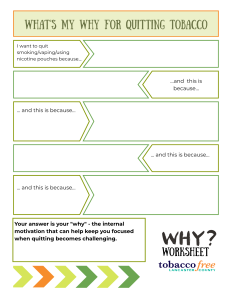
You can download and use this worksheet to write out your why.
- What if my friends or family still vape?
Let your family and friends know that you are quitting vaping. If some of them still vape, consider asking for their support by avoiding vaping around you or giving you some space while you adjust and reduce triggers. You may even encourage them to quit alongside you. It could become a healthy and fun friend/family-group challenge.
- How should I dispose of old vapes?
As you progress on your quit journey, properly dispose of any unused or remaining vaping products instead of keeping them nearby. Proper disposal reduces the risk of accidental exposure, battery-related fires or explosions, and the temptation to start using them again.
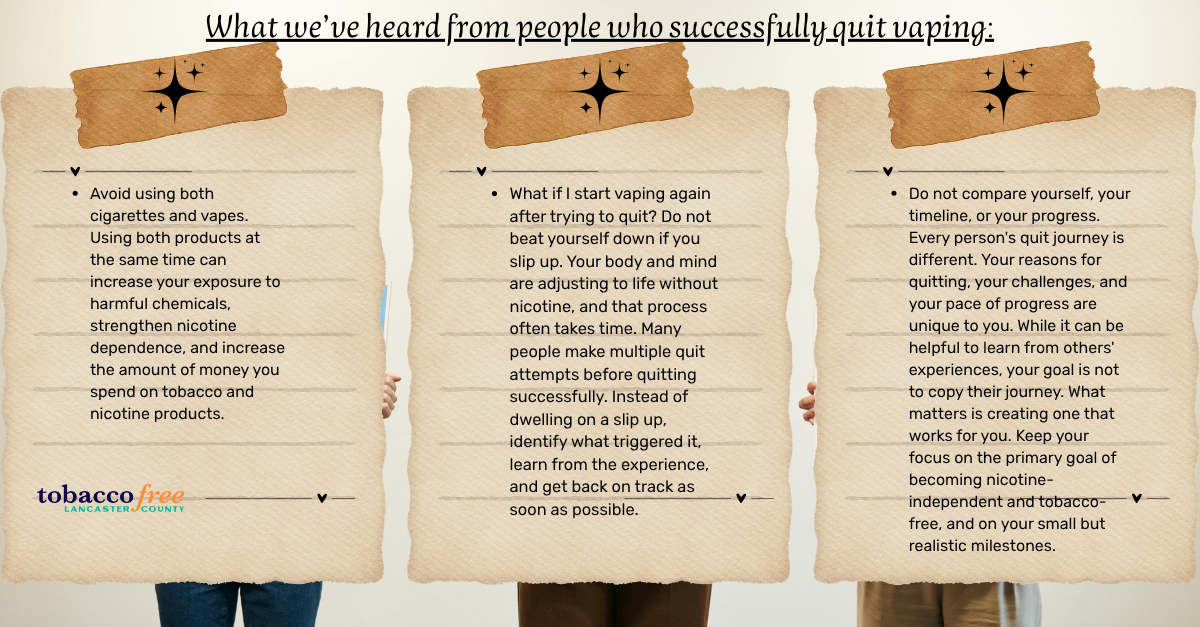
What we’ve heard from people who successfully quit vaping:

Where can I get help?
You can access other resources on TFLC’s quit resources page. It is important to remember that no commercial tobacco or nicotine product is safe, nicotine vaping products are not approved by the U.S. Food and Drug Administration (FDA) as smoking cessation devices, and this article is intended to support the ultimate goal of becoming tobacco- and nicotine-free.
Funding provided by the Nebraska Department of Health and Human Services/Tobacco Free Nebraska Program as a result of an appropriation by the Nebraska State Legislature.